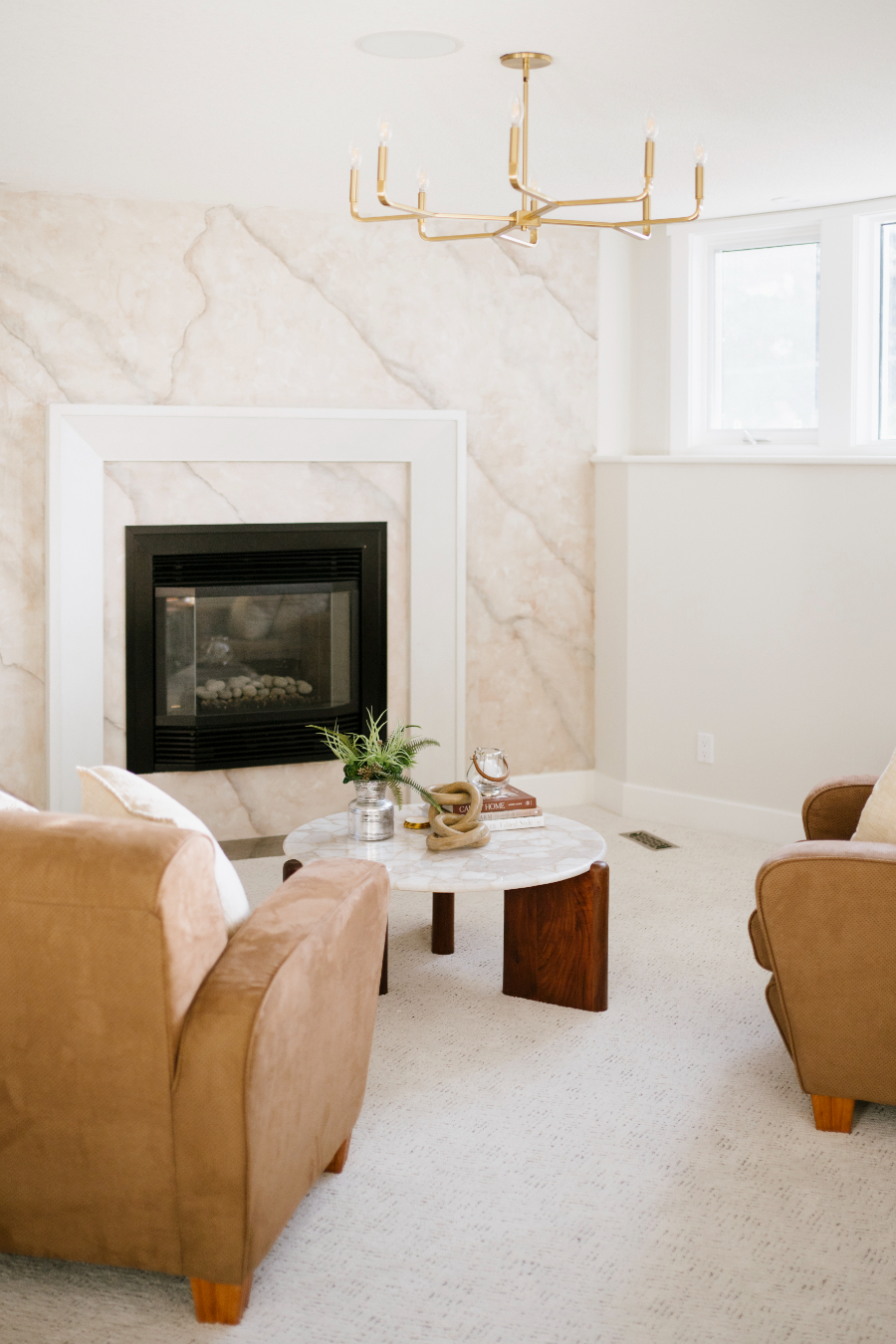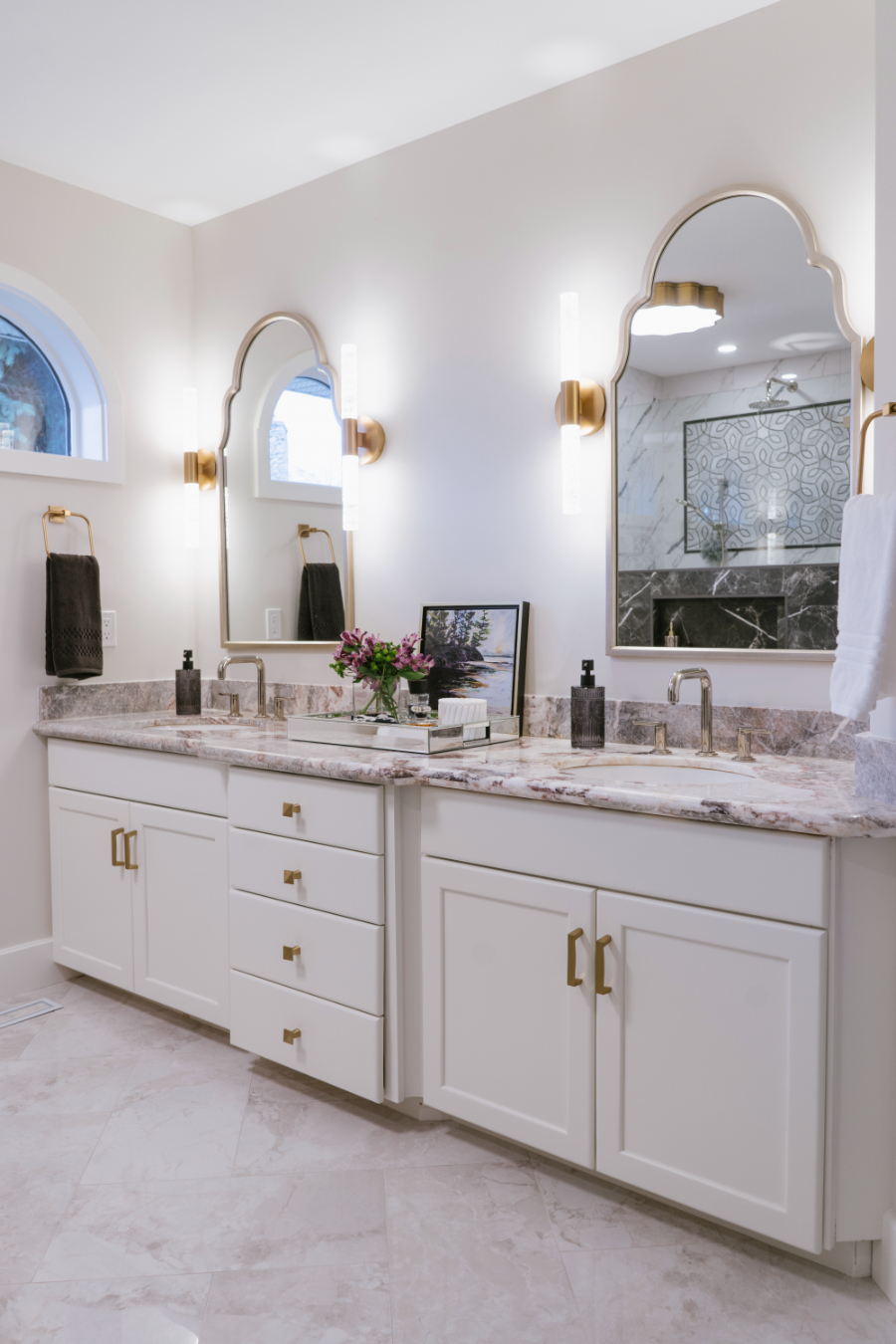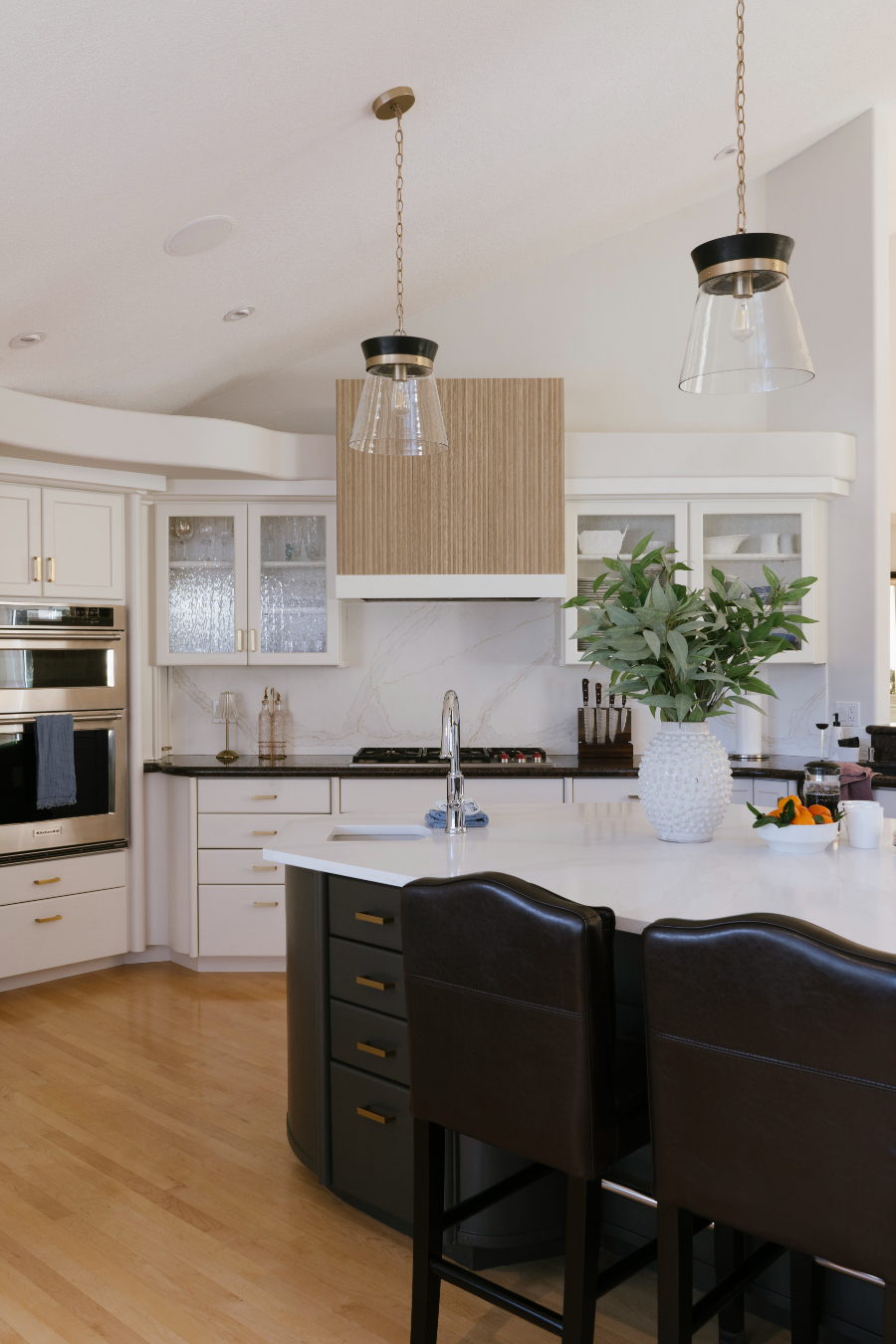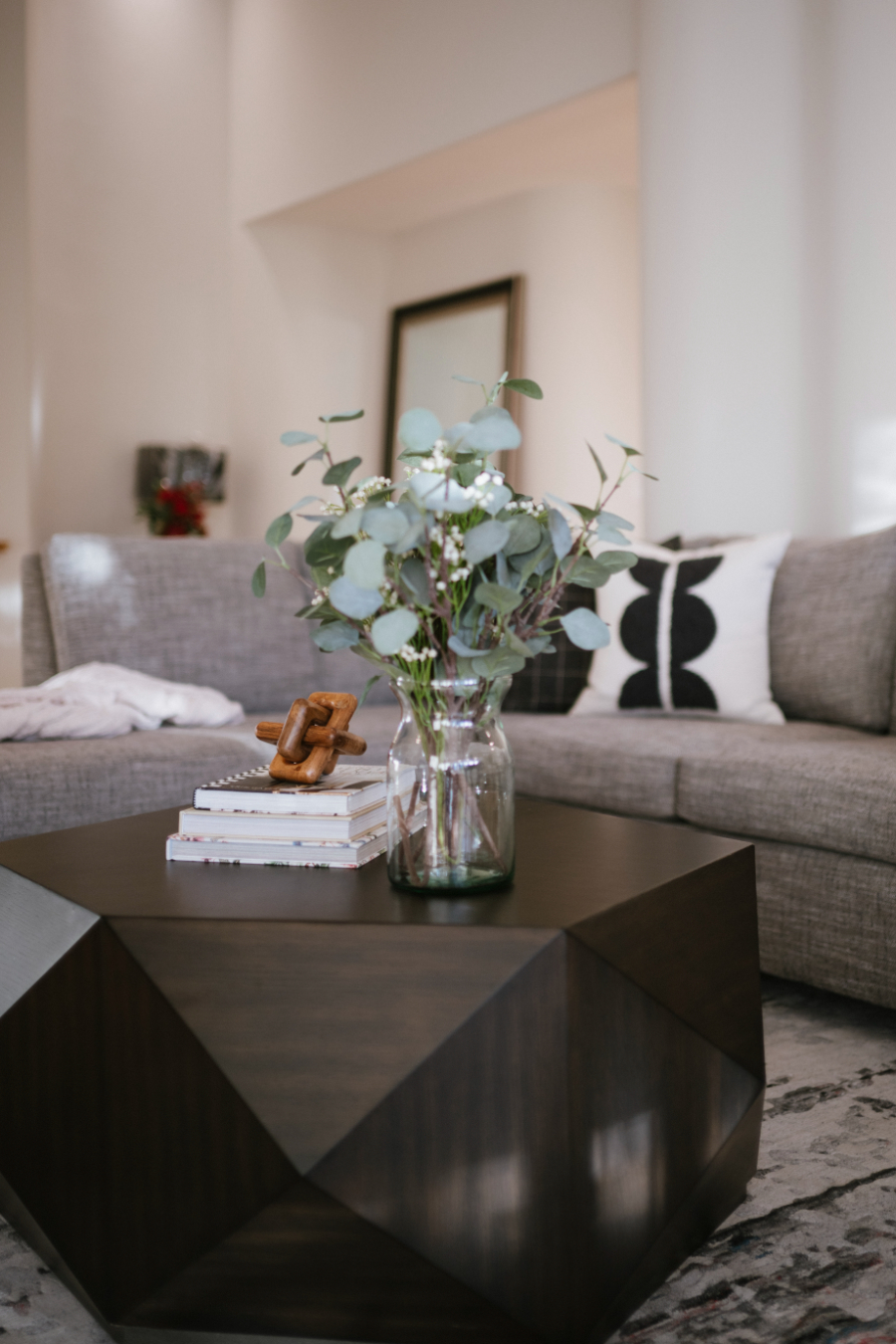
Walk through most homes and you’ll notice something interesting. The kitchen might feel modern and polished. The living room might lean traditional. Then the dining room tells a completely different story.
Many homeowners assume the solution is simple. If they want a cohesive home aesthetic, every room should match.
But that’s rarely the right answer.
In our work as interior designers in Calgary, we see this question often. Clients want their homes to feel connected. They want a sense of design harmony and visual flow. At the same time, they don’t want every space to feel identical.
The truth is this. A beautiful home aesthetic isn’t about matching rooms. It’s about creating rhythm, connection, and personality throughout the home.
Let’s walk through how that works.
Defining Cohesion vs. Matching in a Home Aesthetic
When people talk about creating a cohesive home aesthetic, they often imagine repeating the same colours, materials, and furniture throughout the house.
That approach can quickly make a home feel flat.
Instead, strong interior design focuses on connection rather than duplication. A well-designed home creates a clear colour story, thoughtful design rhythm, and natural room transitions from space to space.
Think of it like music. Each room can play a different note, but together they create a harmonious composition.
A cohesive home aesthetic often includes:
A consistent colour palette that carries through the home
Complementary textures and finishes
Repeating materials such as wood tones, stone, or metal
Similar levels of formality from room to room
Intentional lighting and architectural details
This approach creates design balance while still allowing each room to have its own personality.
And that’s where great Calgary interior design really shines.
Your home should support every season of life. This guide shows how intentional design can adapt to growing families, new routines, and shifting priorities so your space always feels like it fits you.
Your Lifestyle as the Design Thread
Before we ever select cabinetry, flooring, or furniture, we start with something much more important.
Your life.
A successful home aesthetic always begins with lifestyle design. How you live determines how your home should feel.
Do you love hosting large dinners?
Do you spend quiet evenings reading in the living room?
Are you transitioning into empty-nester life and redefining how your home works for you?
These answers guide the design.
Our role as professional interior designers is to identify the common thread that connects your home and build your interior composition around it.
That thread might be:
Warm, welcoming spaces designed for entertaining
Calm, retreat-like rooms for relaxation
Elegant spaces for hosting and gathering
A layered mix of antiques and modern pieces
Once that thread is defined, the home aesthetic begins to unfold naturally.
Every decision supports the same story.
Planning a renovation? Avoid the most common (and costly) mistakes homeowners make. From timelines to trades to design decisions, this guide helps you start with clarity and confidence. Read the renovation tips before you begin.
How We Approach Flow in Open vs. Closed-Plan Homes
Another key factor in designing a cohesive home aesthetic is how the spaces connect architecturally.
Homes with open layouts require a slightly different strategy than homes with traditional rooms.
Open-Concept Homes
In open-plan homes, visual flow is critical because multiple rooms are visible at once.
We carefully coordinate:
Cabinetry finishes
Flooring materials
Lighting selections
Architectural millwork
The overall colour palette
These elements create strong design consistency while still allowing zones to feel distinct.
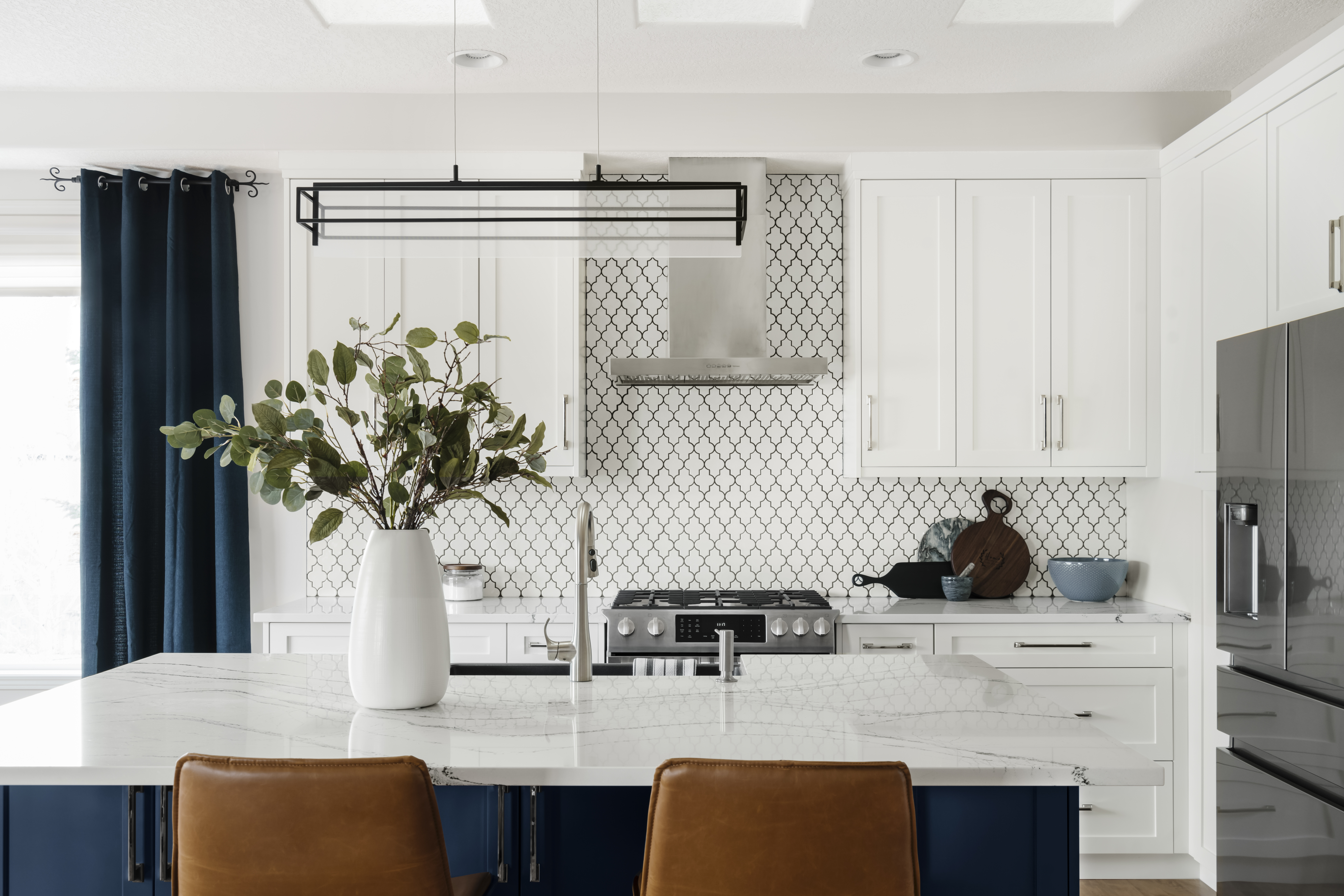
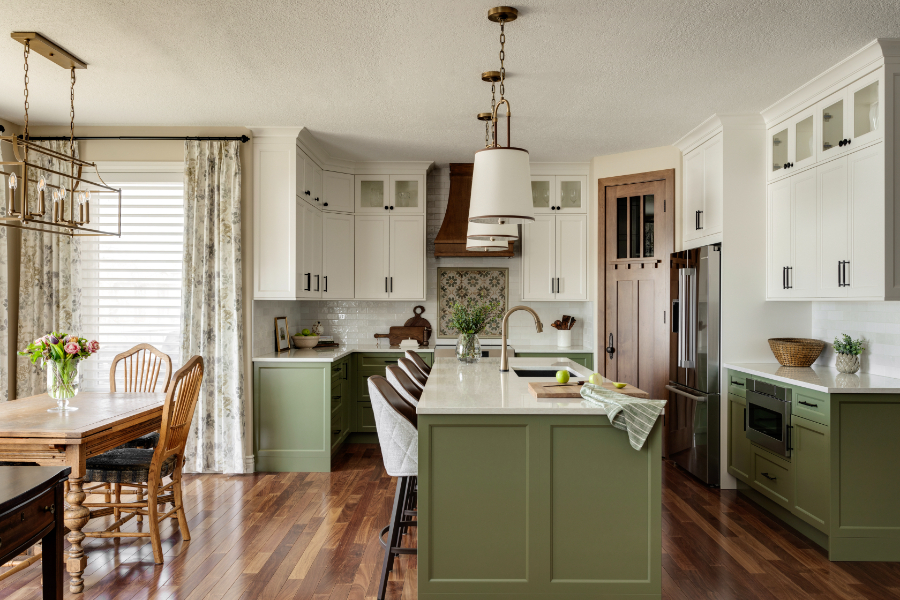
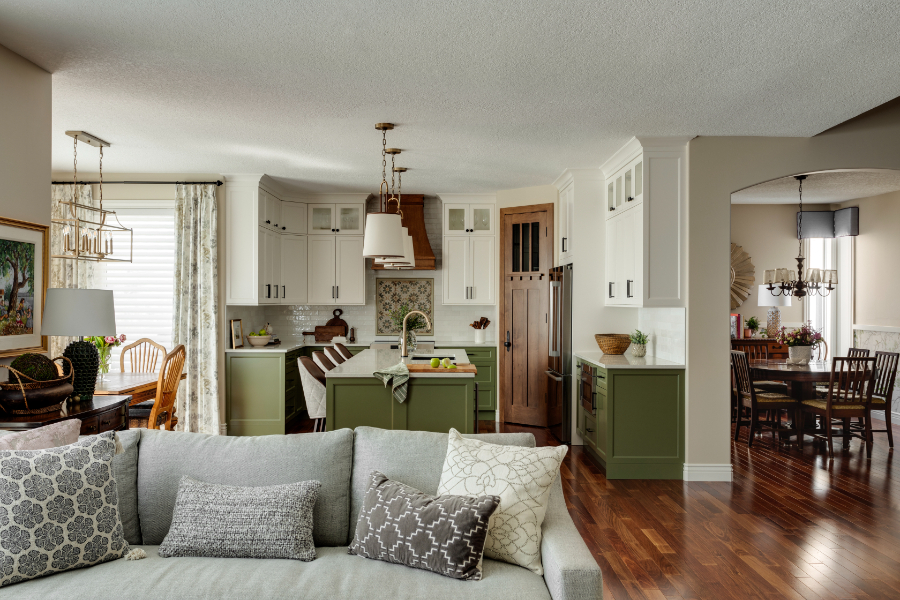
For example, the kitchen may feature statement cabinetry, while the living room introduces layered textures through upholstery and rugs. The dining area might highlight bold statement pieces like a dramatic light fixture.
The spaces feel different, but they clearly belong together.
Closed-Plan Homes
In homes with more traditional layouts, we have more freedom to create contrast.
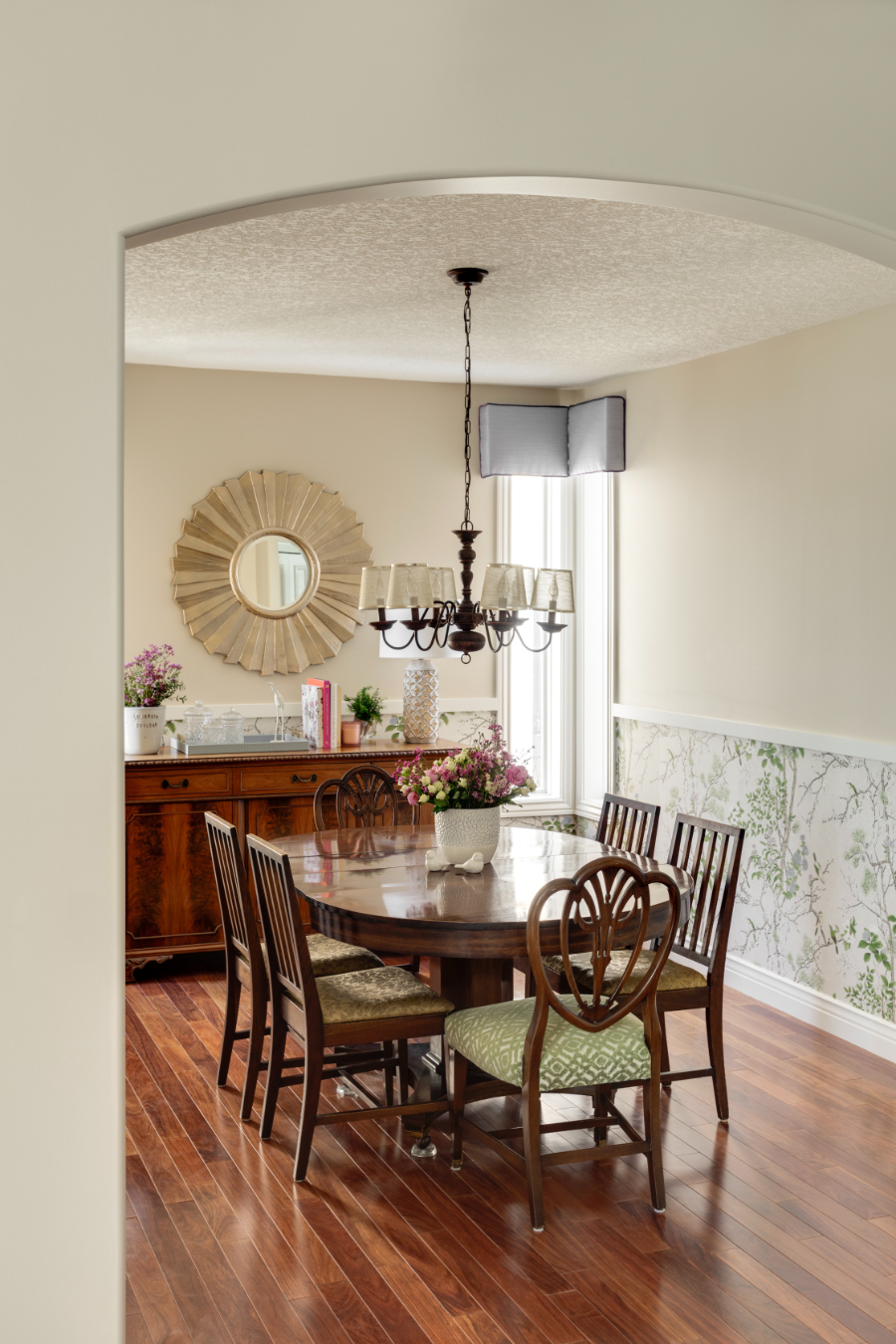
A dining room can introduce a richer wallpaper.
A library might feel darker and more intimate.
A powder room might showcase a dramatic finish.
The key is maintaining a subtle connection so the home aesthetic still feels unified as you move through the house.
Transforming your home starts with a clear, thoughtful design process. Learn how our full‑service approach takes your vision from inspiration to installation—beautifully, seamlessly, and without the overwhelm. Read the full process breakdown.
When to Repeat Elements (And When Not To)
Repetition is one of the most powerful tools in interior styling. But it has to be intentional.
When designing a cohesive home aesthetic, we often repeat certain elements throughout the home.
These might include:
Wood tones used in millwork, cabinetry, and furniture
A signature metal finish across lighting and hardware
A consistent colour story with a few key accent tones
Architectural trim or panel details
Similar flooring materials throughout the main level
This repetition creates the design flow that allows the home to feel connected.
But repetition should never feel rigid.
For example, repeating the same accent colours in different ways across rooms can create a beautiful sense of design rhythm without making the spaces feel identical.
One room might introduce the colour in drapery.
Another might use it in upholstery or artwork.
The result is a layered, intentional home aesthetic that evolves as you move through the home.
Cohesion Through Custom Touches
One of the most effective ways to build a cohesive home aesthetic is through thoughtful custom details.
These architectural touches quietly carry the design through the home.
Custom features we often incorporate include:
Millwork detailing across multiple rooms
Built-in cabinetry that echoes the kitchen design
Custom furniture pieces scaled for the space
Coordinated lighting selections throughout the home
Thoughtful transitions in flooring materials
These details create continuity without making the rooms feel repetitive.
They also elevate the home from standard renovation to true luxury interior design.
When every finish, texture, and detail works together, the home begins to feel effortless.
And that’s the goal.
Real Project Example: One Home, Many Stories
A great example of a cohesive home aesthetic came from our Tuscany Glen renovation in northwest Calgary.
Trish and Brad had lived in their home for more than twenty years. While it held countless memories, the main floor had begun to feel dated and disconnected from how they lived today.
As empty nesters, they wanted a home that felt fresh, welcoming, and better suited to entertaining.
The existing kitchen was classic early-2000s design. Honey-toned cabinetry, a raised eating bar, and an awkwardly angled island created visual clutter and limited functionality.
Meanwhile:
The living room felt crowded with oversized furniture
The dining room was dark and rarely used
Overall, the spaces lacked a cohesive design flow.
During our Design Strategy Session and early design development, we explored several directions. At first, Trish gravitated toward cool grey palettes she was seeing everywhere online.
But as we explored the design together, it became clear that warmer tones better suited both the home and her personal style.
That discovery shaped the entire home aesthetic.
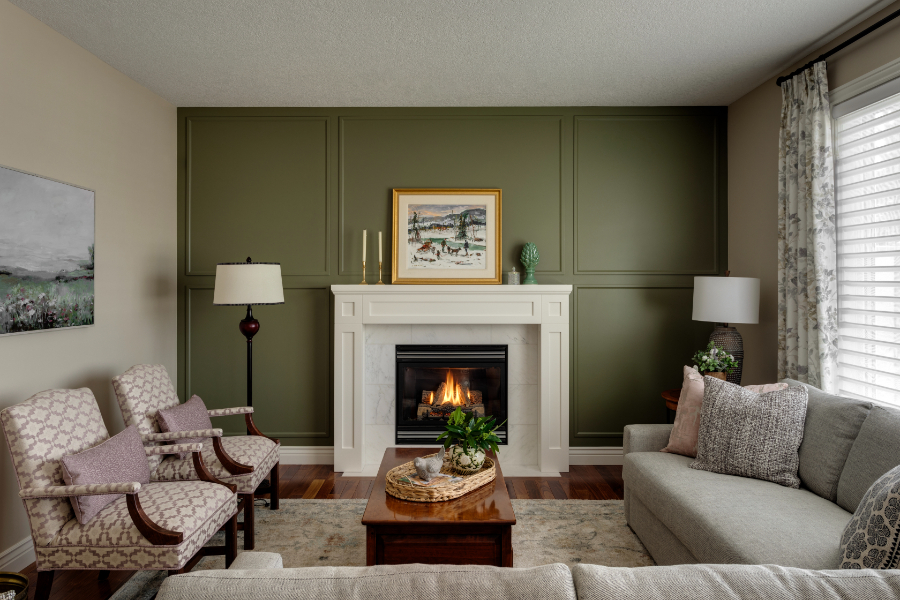
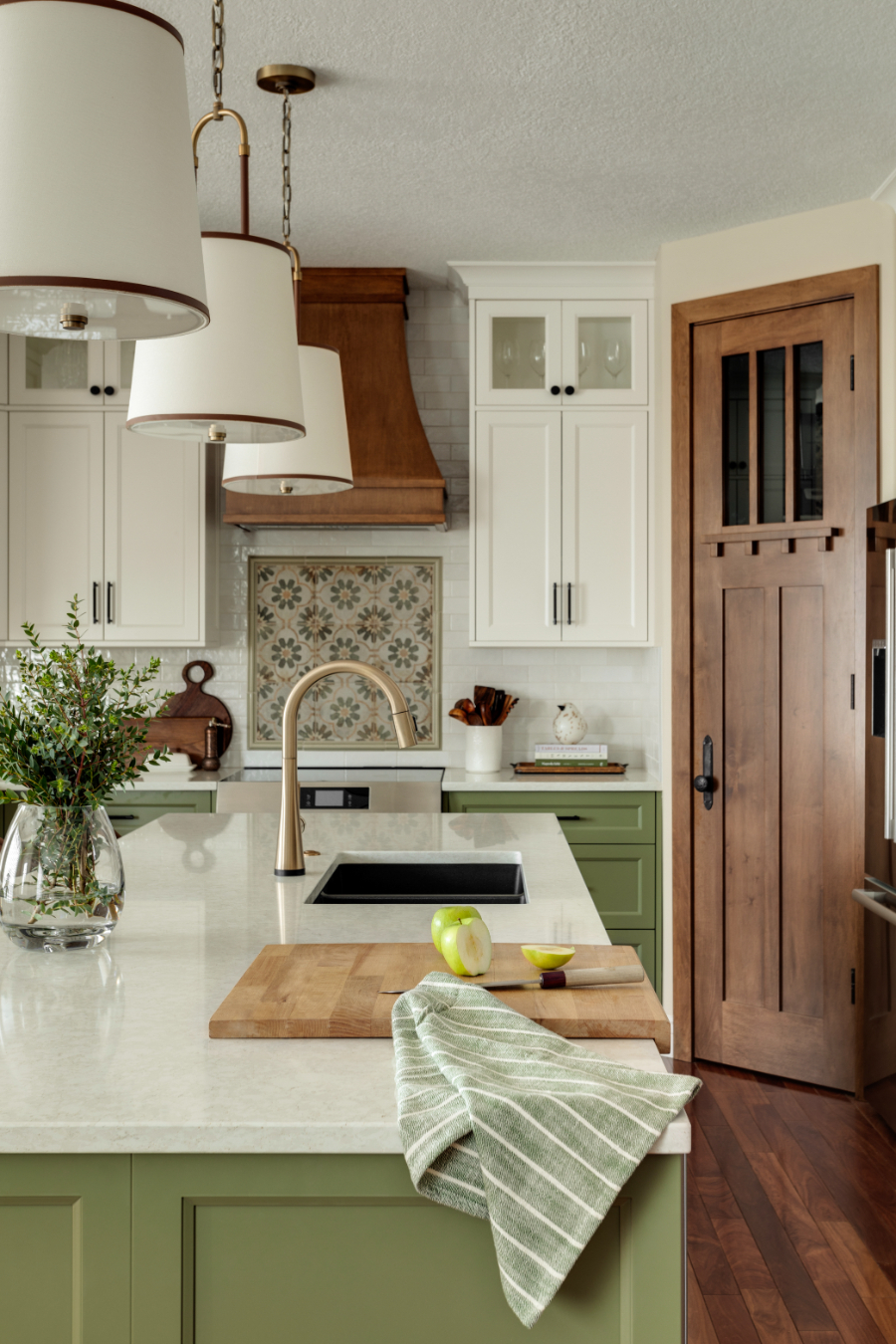
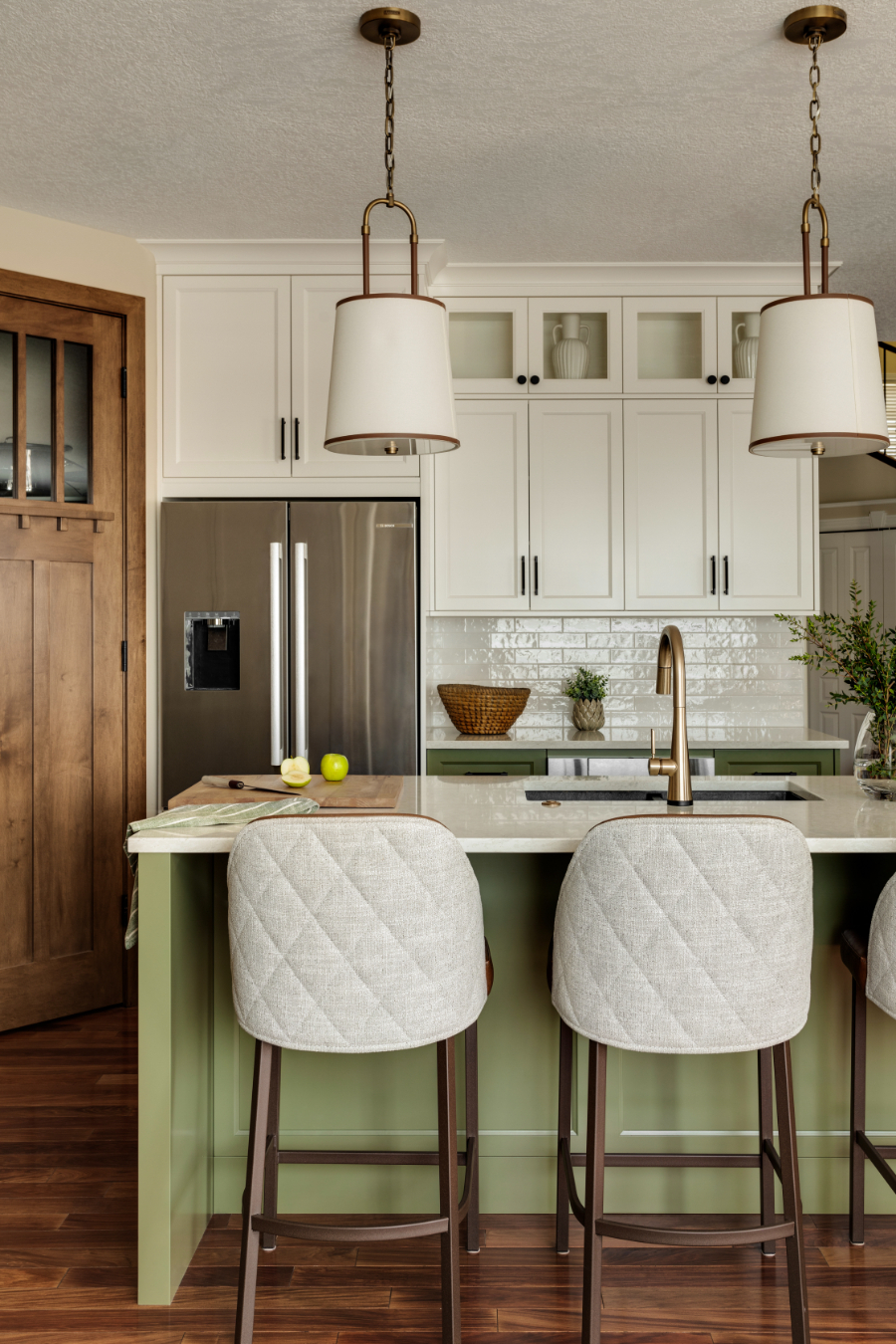
We introduced a rich olive tone for the kitchen’s base cabinetry and the panelled living room wall, adding warmth and anchoring the design across the main floor. The kitchen layout was refined within its existing footprint to improve sightlines and functionality.
Rather than removing the corner pantry, which Trish loved, we celebrated it with a custom maple door.
Throughout the home, beloved pieces were refreshed. Two occasional chairs were reupholstered to complement new drapery and dining room wallpaper, while inherited dining chairs were updated to fit the evolving colour palette.
The result was a warm, welcoming main floor where family antiques lived comfortably alongside new furnishings. It felt personal, timeless, and ready for the next chapter of their lives.
The True Goal of a Cohesive Home Aesthetic
At the end of the day, a cohesive home aesthetic isn’t about matching rooms.
It’s about creating connection.
When the colour palette, materials, textures, and architectural details work together, the entire home begins to feel intentional.
Each room can still have its own personality.
But together, they create something far more powerful: a home that feels calm, complete, and deeply personal.
That’s the heart of thoughtful Calgary interior design. And it’s exactly what we aim to achieve in every whole home renovation we guide.
If you’re thinking about transforming your home and want to explore how a cohesive home aesthetic could shape your space, we’d love to talk.
Let’s start your journey.
If you’re considering a kitchen renovation in Cochrane, Bearspaw, Springbank, or Calgary, we’d love to chat about how we can help you bring your renovation dreams to life. Give us a call at (403) 860-5901, email us at hello@roomserviceinteriors.ca, or learn more about our team here. Let’s turn your vision into a space you’ll love—one thoughtful choice at a time!
Until next time,
Michelle xx