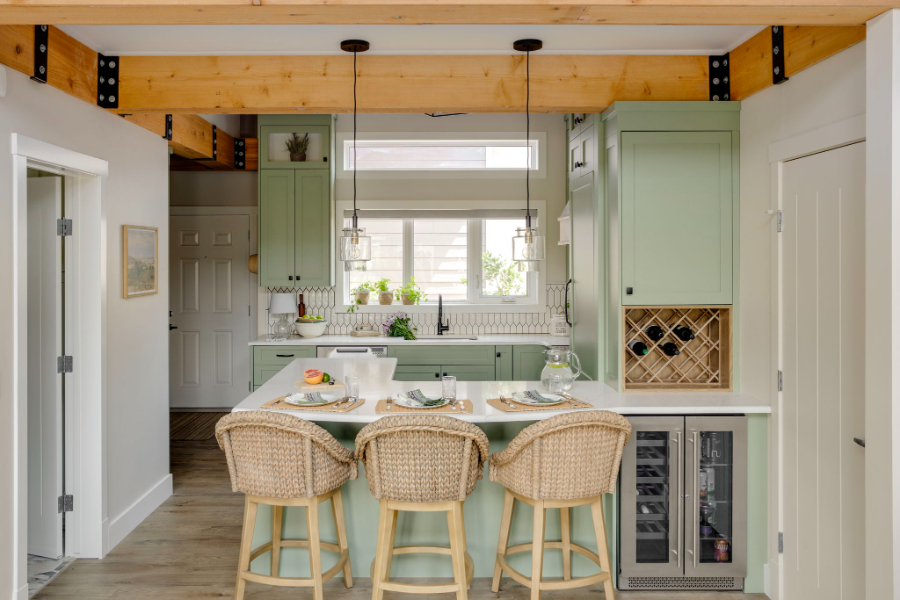
Have you ever walked into a room and thought, “This space feels so cramped,” only to learn it’s actually a decent size?
We see this all the time.
A homeowner in Cochrane or Calgary might assume their living room, kitchen, or primary bedroom is simply too small. They start searching for ways to make it feel larger. Maybe they look at paint colours, mirrors, or furniture swaps. Sometimes those changes help. Sometimes they don’t.
That’s because square footage isn’t always the problem.
When we’re helping clients figure out how to make a small room look bigger, we start by looking at how the room functions. How do people move through it? Where does the eye land when entering? Is furniture blocking circulation? Is storage working properly?
The answers often reveal opportunities that go far beyond decorating.
Hi, we are Room Service Interiors. We design homes throughout Cochrane, Bearspaw, Springbank, and Calgary that support how our clients live today while planning for the years ahead. Our work often includes kitchen renovations, bathroom renovations, whole-home transformations, and thoughtful space planning that helps every room feel more comfortable and functional. Our approach focuses on lifestyle, longevity, and a structured design process that removes surprises along the way.
If you’re struggling with a room that feels cramped, we’d love to help.
Want to discuss your project? Explore our services or book a Discovery Call to start the conversation.
READY TO SKIP THE STRESS AND LOVE YOUR RENOVATION? CLICK HERE TO LEARN MORE ABOUT OUR CLEAR, “NO SURPRISES” DESIGN PROCESS!
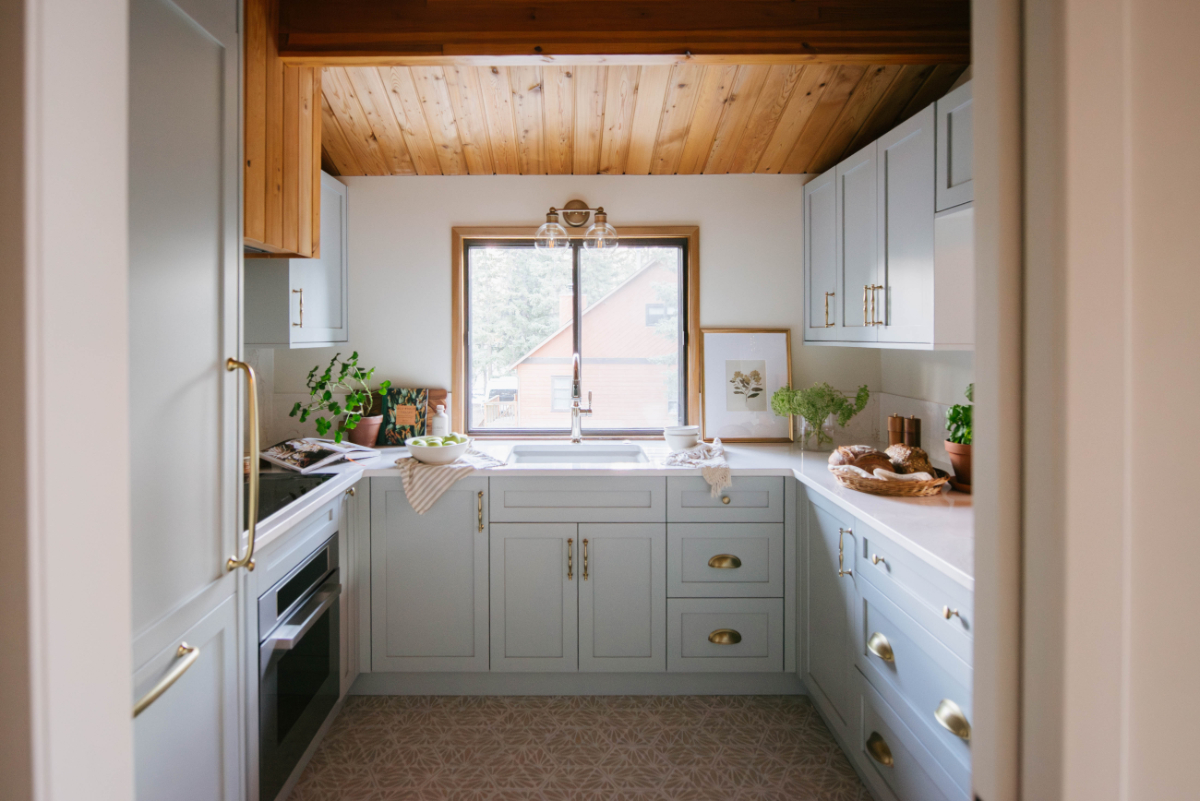
Why Small Rooms Often Feel Smaller Than They Really Are
One of the biggest misconceptions about how to make a small room look bigger is that you need more square footage.
In many cases, you don’t.
A room can feel smaller because of:
- Oversized furniture
- Poor furniture placement
- Cluttered surfaces
- Limited storage
- Dark corners
- Blocked sightlines
- Too many competing finishes and colours
When evaluating small living spaces, we pay close attention to circulation. If people constantly have to walk around furniture or squeeze through narrow pathways, the room immediately feels tighter than it actually is.
Before changing finishes or furnishings, it’s worth asking whether the room is truly too small or simply not being used efficiently.
Layout Strategies That Help Small Rooms Feel More Spacious
When clients ask us how to make a small room look bigger, layout is usually the first place we start (long before we talk about paint colours or accessories).
Good space planning creates visual breathing room.
A few strategies we frequently use include:
Create Clear Walking Paths
People should be able to move comfortably through a room without weaving around furniture.
When pathways are clear, a room feels calmer and more spacious.
Protect Sightlines
The farther your eye can travel, the larger a room feels.
That’s why we often avoid placing tall furniture directly in front of windows or major focal points.
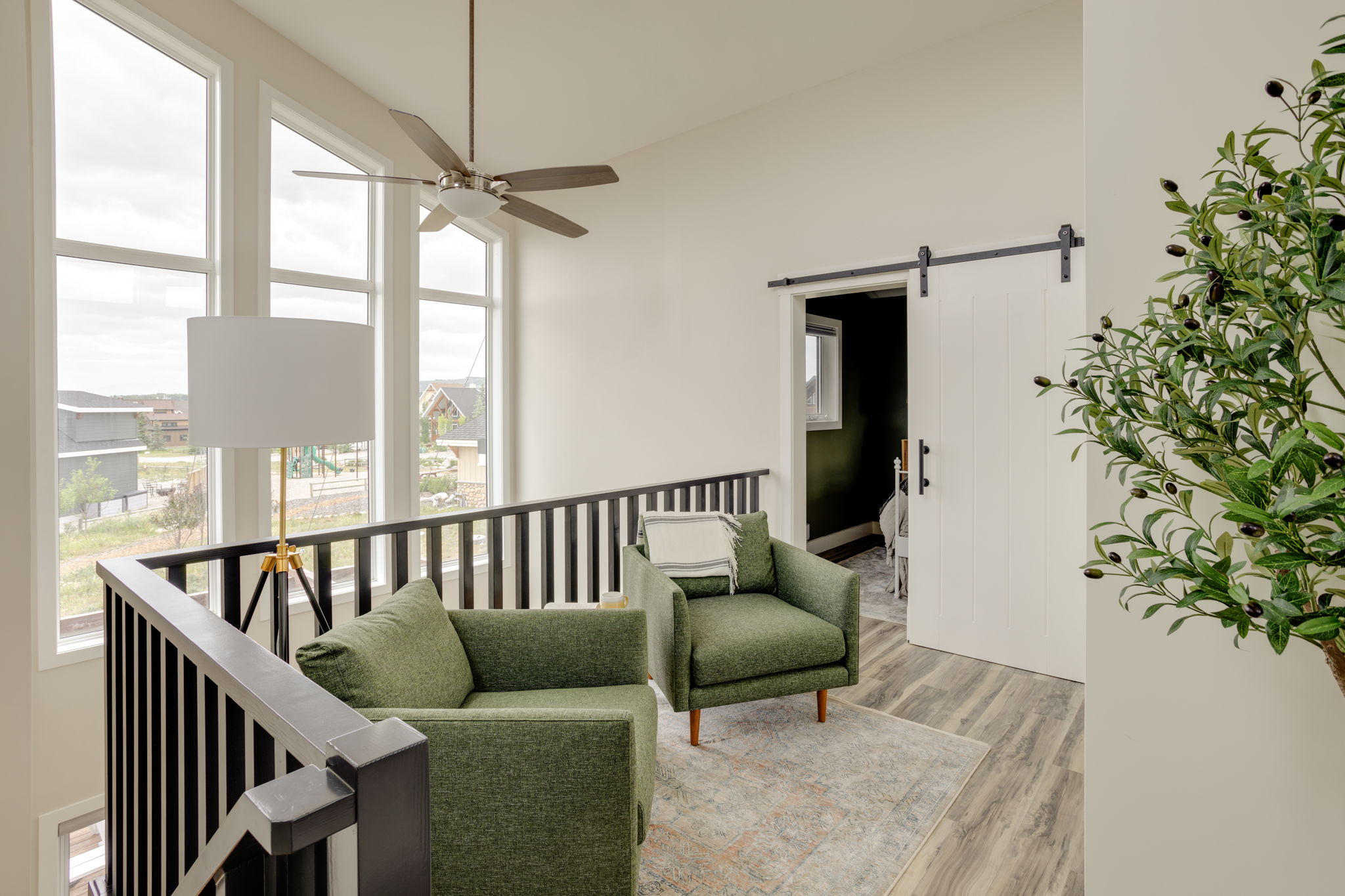
Define Functions Clearly
In many small house interiors, one room often serves multiple purposes.
A living room may also function as a reading area, conversation space, or home office.
Defining each area intentionally helps the room feel organized rather than crowded.
Consider Structural Changes
Sometimes the most effective answer to how to make a small room look bigger involves renovation rather than rearranging furniture.
Opening a doorway, widening a passage, or removing part of a wall can dramatically improve how connected a space feels.
This is especially common when we’re working on living area design for small spaces and older homes with compartmentalized floor plans.
For more ideas, you may also enjoy our articles on small kitchen layouts and compact kitchen design.
Working with a compact kitchen? Layout often has a bigger impact than square footage. In our article on small kitchen layouts, we share design considerations that help kitchens function more efficiently, improve traffic flow, and create a greater sense of openness throughout the room.
Colour Palettes That Make a Small Room Look Bigger
Paint colour can absolutely influence how spacious a room feels, but the answer isn’t always painting everything bright white.
In fact, white can sometimes make a small room feel flat or unfinished if the lighting, flooring, furniture, and architectural details aren’t working together. A small room painted white is still a small room (it may just be a small room with commitment issues).
When we’re helping homeowners figure out how to make a small room look bigger, we focus less on choosing the lightest colour and more on reducing visual interruption.
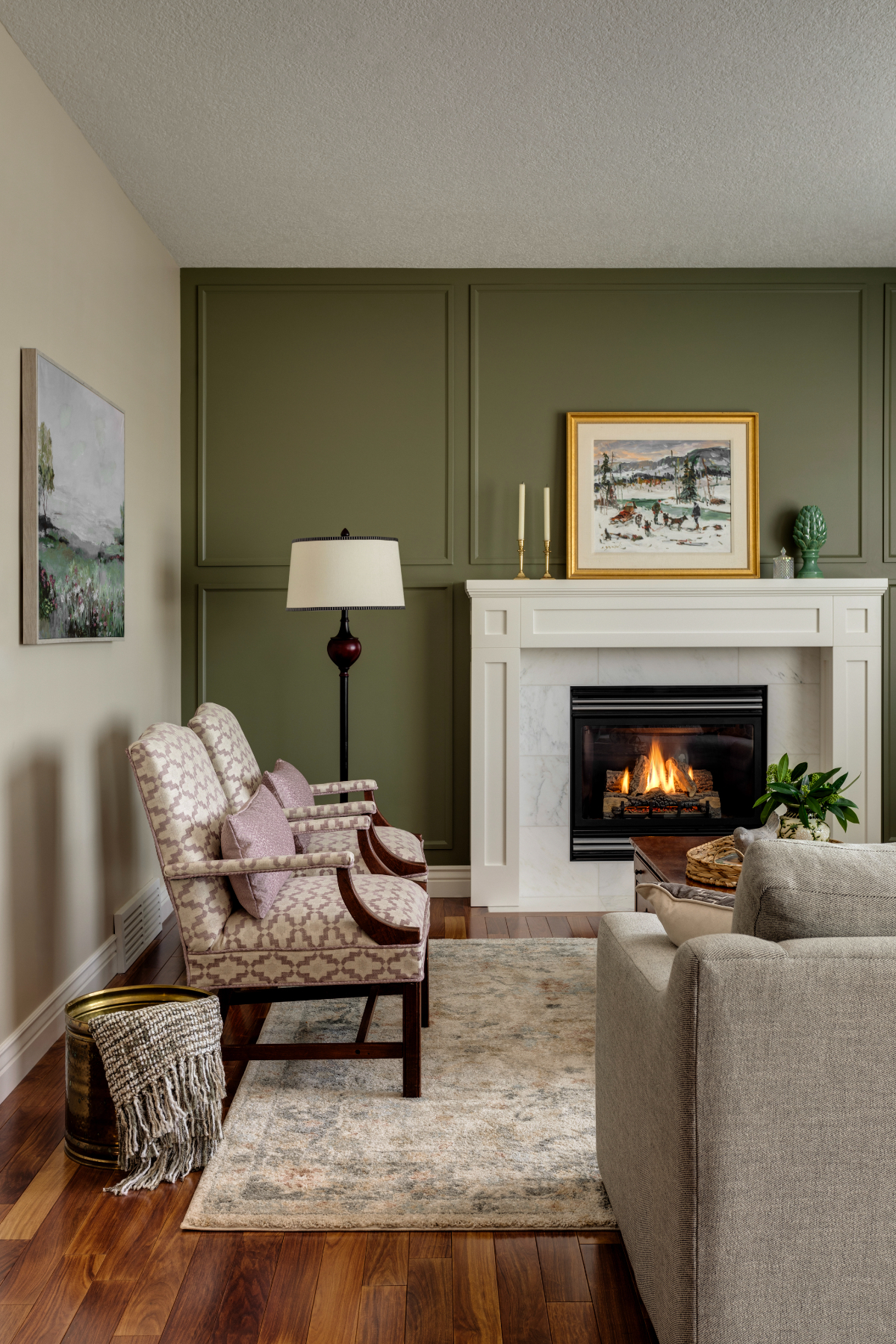
That might mean using a tonal palette where walls, trim, cabinetry, ceilings, and larger furnishings relate closely to one another. It might mean carrying similar colours from one room to the next so the eye moves naturally through the home. In some cases, it may even mean using a deeper colour intentionally to create depth and a more enveloping feel.
The goal is continuity.
High contrast can be beautiful, but in compact rooms it needs to be used carefully. Strong accent walls, sharply contrasting trim, busy tile patterns, or dramatic colour changes can create visual breaks that make a room feel more segmented.
Instead, we often look for ways to create flow by:
- Keeping wall and trim colours closely related
- Minimizing abrupt colour changes between connected spaces
- Using cabinetry and built-ins that blend into the architecture
- Carrying flooring consistently where possible
- Choosing finishes that work with the room’s natural light
- Using contrast only where we want the eye to land
In other words, colour should support the architecture and layout, not compete with it.
For small homes, compact kitchens, and renovations where multiple rooms are visible at once, this approach can make a noticeable difference. The room doesn’t just feel brighter. It feels calmer, more connected, and more thoughtfully designed.
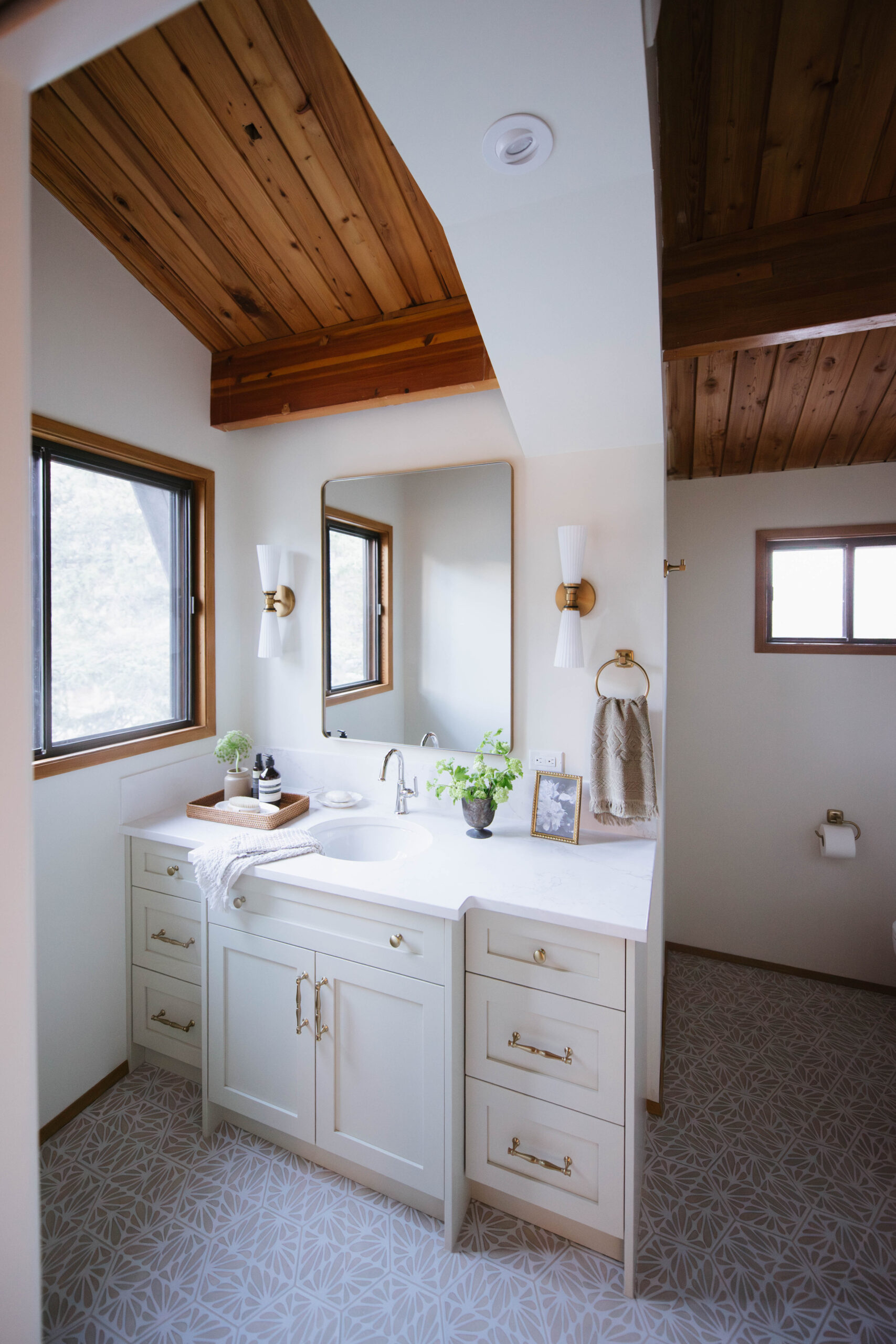
Lighting Techniques That Expand a Room Visually
Lighting plays a major role in how to make a small room look bigger.
A poorly lit room often feels smaller than it actually is (even when the dimensions haven’t changed at all).
Rather than relying on a single ceiling fixture, we typically layer lighting throughout a space.
That may include:
- Recessed lighting
- Wall sconces
- Table lamps
- Under-cabinet lighting
- Accent lighting
Natural light also matters.
Heavy window treatments can make a room feel closed off. Depending on privacy needs, lighter fabrics or carefully selected window coverings may help maximize daylight.
During renovations, we sometimes explore larger windows or revised layouts that allow light to travel farther through the home.
Furniture Choices That Improve Flow and Proportion
Furniture selection has a huge impact on how to make a small room look bigger.
One mistake we often see is homeowners filling a room with many small pieces because they’re worried larger furniture will overwhelm the space.
Ironically, the opposite can happen.
Several undersized pieces often create visual clutter (which is why buying smaller furniture isn’t always the answer).
Instead, we focus on proportion.
Some of our favourite approaches include:
- Choosing furniture scaled appropriately for the room
- Using legged furniture that reveals more floor area
- Limiting unnecessary accent pieces
- Floating furniture when appropriate rather than pushing everything against walls
When we design a living room for small spaces, we think about how every piece contributes to the overall function of the room.
The goal isn’t to fit more furniture into the space.
The goal is to create a room that feels comfortable and easy to use.
When space is limited, every item in the room needs to earn its place. We explore this idea further in our article on luxury small kitchen appliances, where we look at how thoughtfully selected appliances can support functionality without overwhelming a compact kitchen.
Storage Solutions That Keep Small Rooms Calm and Clutter-Free
Storage is one of the most overlooked answers to how to make a small room look bigger.
Even a beautifully designed room can feel crowded if everyday items don’t have a place to go.
Some of the most effective solutions include:
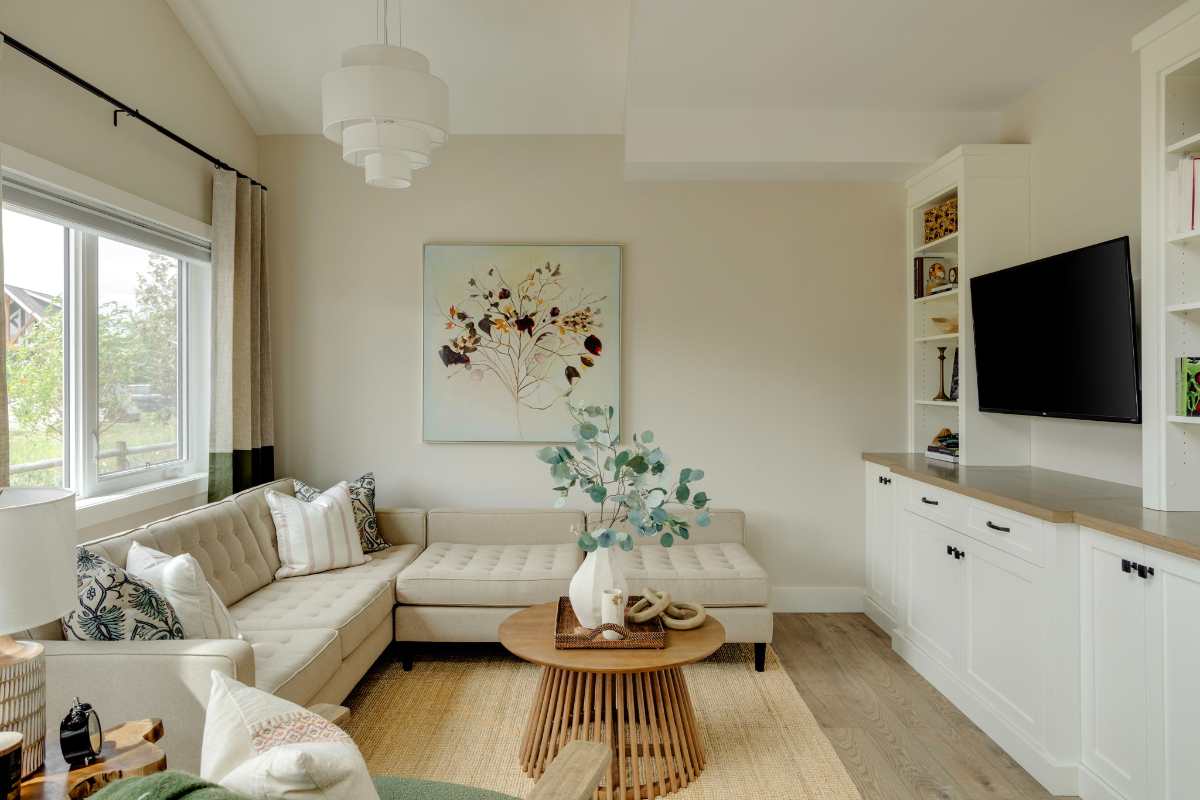
- Built-in cabinetry
- Custom millwork
- Hidden storage benches
- Multi-functional furniture
- Integrated shelving
In many renovation projects, we look for opportunities to build storage directly into the architecture of the home.
That’s often more effective than continually adding standalone furniture (especially when every square foot matters).
Many of our clients are planning to remain in their homes long-term (AKA living-in-place). Well-designed storage helps support both daily comfort and future functionality.
These solutions work particularly well in living room small space ideas and other areas where storage needs are high.
One of the easiest ways to make a room feel larger is to be more selective about what comes into it in the first place. We shared some of our favourite home decor stores in Calgary, along with how we approach sourcing pieces that add character without creating visual clutter. It’s a helpful resource if you’re trying to create a home that feels collected, cohesive, and comfortable to live in.
When Renovation Makes More Sense Than Rearranging
Sometimes homeowners spend years trying to solve a problem with furniture and décor when the real issue is the room itself.
If you’ve already experimented with layout changes, it may be time to consider whether a renovation would create a better result.
Examples include:
- Removing partial walls
- Widening openings between rooms
- Reworking kitchen layouts
- Creating custom storage
- Improving circulation patterns
This is often where professional design becomes especially valuable.
Instead of looking at one room in isolation, we evaluate how the entire home functions together.
For many homeowners searching how to make a small room look bigger, the answer isn’t another decorating purchase. It’s a better plan.
When a Professional Interior Designer Can Transform a Small Space
A successful small-space design isn’t about following trends.
It’s about understanding how people actually live.
As professional interior designers in Calgary, Cochrane, Bearspaw, and Springbank, when we begin a project, we look beyond furniture and finishes.
We consider:
- Daily routines
- Entertaining needs
- Storage requirements
- Future accessibility
- Lighting
- Traffic flow
- Long-term goals for the home
Through our Design Strategy Session and structured No-Surprise Process, we help homeowners identify opportunities they may not have considered on their own.
Whether we’re working on ideas for small spaces, planning renovations, or designing entire homes, the goal remains the same: creating spaces that feel comfortable, functional, and tailored to the people who live there.
Frequently Asked Questions
What colour makes a small room look bigger?
Generally, light and consistent colour palettes help a room feel more open. Warm neutrals often create a softer, more inviting result than stark white.
Can furniture make a room feel smaller?
Absolutely. Oversized furniture, poor placement, and too many pieces can restrict movement and make a room feel crowded.
Does removing a wall always make a room look bigger?
Not always. Every home is different. Sometimes improving circulation or sightlines creates a better result than removing walls.
How do you design a living room for small spaces?
We start by evaluating function, circulation, furniture scale, and storage needs. Good space planning is usually more effective than simply purchasing smaller furniture.
Is hiring an interior designer worth it for a small room?
Small rooms often require more planning than larger spaces because every decision has a greater impact. Professional design can help identify opportunities that aren’t immediately obvious.
A Bigger Feeling Doesn't Always Require More Square Footage
The rooms that feel largest aren’t necessarily the rooms with the most square footage (some of our favourite projects have been surprisingly compact).
They’re the rooms that have been thoughtfully planned around the people who use them.
If you’ve been researching how to make a small room look bigger, start by looking beyond paint colours and decorating tricks. Layout, storage, lighting, and circulation often have a much greater impact.
If you’re considering a renovation or want professional guidance on improving your home, we’d love to help.
Book a Discovery Call, check out our services and follow us on Instagram to learn how we can help you create a home that feels comfortable, functional, and designed for the way you live.